Best For
Teams this article is built to help
Category: Behavior Management
Evidence
What backs this guide
Curated references are cited at the end of the article.
Materials
What you can leave with
- Condensed key takeaways
- 1 bonus download
- Interactive self-check quiz
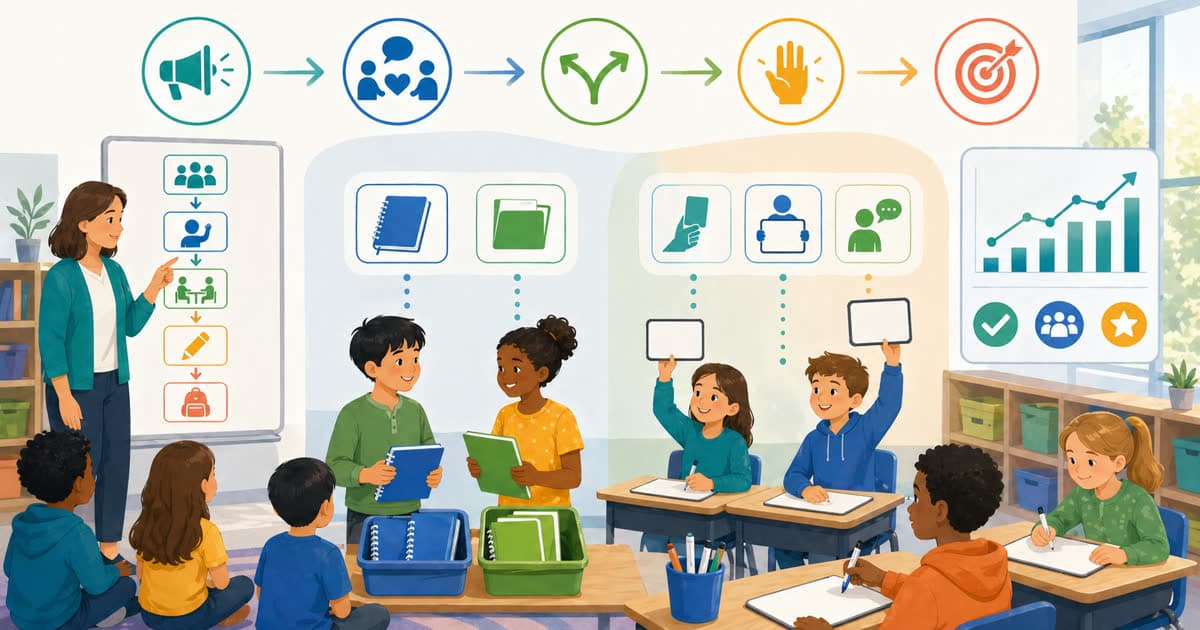
ABC data should not only tell teams what happened after behavior. It should help adults change what happens before behavior. Precorrection, choice, and opportunities to respond are practical antecedent strategies because they increase the chance that students contact success before the routine becomes difficult.
The Prevention Question
If the same antecedent keeps showing up in ABC data, the team should ask: What can adults change before that moment so the student is more likely to succeed?
Precorrection: Remind Before, Not After
Precorrection means reminding or cueing students about the expected behavior before a predictable problem situation. It is not a reprimand. It is a proactive prompt.
"In two minutes, we move to writing. Remember, if the first sentence feels hard, use your help card."
"Before we line up, show me what hallway hands look like."
"When you finish the preferred activity, you can choose math first or reading first."
Choice: Increase Agency Without Losing Structure
Choice is not giving up instructional control. It is offering controlled options that all lead to the intended learning or routine. The WWC practice guide identifies instructional choice as a moderate-evidence recommendation.
- Task order: "Do vocabulary or questions first."
- Materials: "Use pencil or marker."
- Location: "Work at your desk or side table."
- Response format: "Tell me, write it, or point to your answer."
- Support: "Start alone or start with me for the first one."
Opportunities to Respond: Reduce Passive Waiting
Students are more likely to disengage when they spend long stretches watching, waiting, or listening without participating. Opportunities to respond increase active engagement and give teachers more chances to reinforce expected behavior.
Low-Prep Responses
Thumbs up/down, response cards, choral responding, quick partner share, whiteboard answer.
Data Connection
If behavior peaks during long teacher talk, add response opportunities before changing consequence strategies.
Choose the Strategy From the ABC Pattern
| ABC Pattern | Likely Prevention Move |
|---|---|
| Behavior follows transitions from preferred to nonpreferred activity | Precorrection, countdown, visual schedule, limited choice |
| Behavior follows difficult independent work | Choice, chunking, help card, first-step prompt |
| Behavior follows long whole-group instruction | Frequent opportunities to respond and active engagement |
References
Lane, K. L., Baldy, T., Becker, T., Bradshaw, C., Dolan, V., Dymnicki, A., Freeman, B., Holian, L., Lemire, S., McIntosh, K., Moulton, S., Nese, R., Payno-Simmons, R., Porowski, A., & Sutherland, K. (2024). Teacher-Delivered Behavioral Interventions in Grades K-5. What Works Clearinghouse. https://ies.ed.gov/ncee/WWC/PracticeGuide/31/Published
Simonsen, B., Fairbanks, S., Briesch, A., Myers, D., & Sugai, G. (2008). Evidence-based practices in classroom management: Considerations for research to practice. Education and Treatment of Children, 31(3), 351-380. https://doi.org/10.1353/etc.0.0007
IRIS Center. (2025). Functional Behavioral Assessment (Elementary): Identifying the Reasons for Student Behavior. Vanderbilt University. https://iris.peabody.vanderbilt.edu/module/fba-elem/
Put This Into Practice
Turn the article into action with ready-to-use materials. Downloads stay open; emailed resources and quiz results are opt-in.
Key Takeaways
- Antecedent strategies are chosen from patterns in ABC data
- Precorrection reminds students of expected behavior before the hard routine starts
- Instructional choice can increase engagement and agency
- Frequent opportunities to respond reduce passive waiting time and support active participation
- Prevention strategies should be monitored just like consequence strategies
Bonus Materials
Clean downloads to pair with this article
Download resources directly or send a copy to your inbox. Marketing updates are optional.
Setting Event Checklist
Identify background factors that may increase risk before behavior occurs
How Well Do You Prevent Behavior Before It Starts?
Evaluate your use of precorrection, choice, and opportunities to respond to prevent challenging behavior proactively.
Tags:
For classroom teams
Put this into practice with your own data
Log behaviors as they happen, see the pattern on a graph, and bring a clear summary to your next team meeting.
Track Antecedent PatternsFree for up to 3 students. No credit card required.
About the Author
Practical guides from the Classroom Pulse team for educators and behavior support teams who collect and use behavior data. Classroom Pulse was founded by Bobby Hillman, M.Ed., LBA, BCBA.
About Classroom PulseRelated Articles
The October Slump: Behavior Data Habits for First-Year Teachers
Many first-year teachers hit a wall in the fall. Here are small behavior data habits that survive it, what to stop doing, and how mentors and principals can help.
Class Parties, Costume Days, and Assemblies: Planning Behavior Support
Event days stack changed routines, noise, costumes, food, and thin adult structure. Plan them like a new routine, staff them like a transition, and tag them in your data.
From 'He Always Melts Down After Lunch' to Usable ABC Data
Five real-sounding hallway anecdotes translated step-by-step into ABC log entries, and how a few weeks of honest entries turn instinct into a testable pattern.