Best For
Teams this article is built to help
Category: Behavior Management
Evidence
What backs this guide
Curated references are cited at the end of the article.
Materials
What you can leave with
- Condensed key takeaways
- Interactive self-check quiz
The Summer Slide Is Real
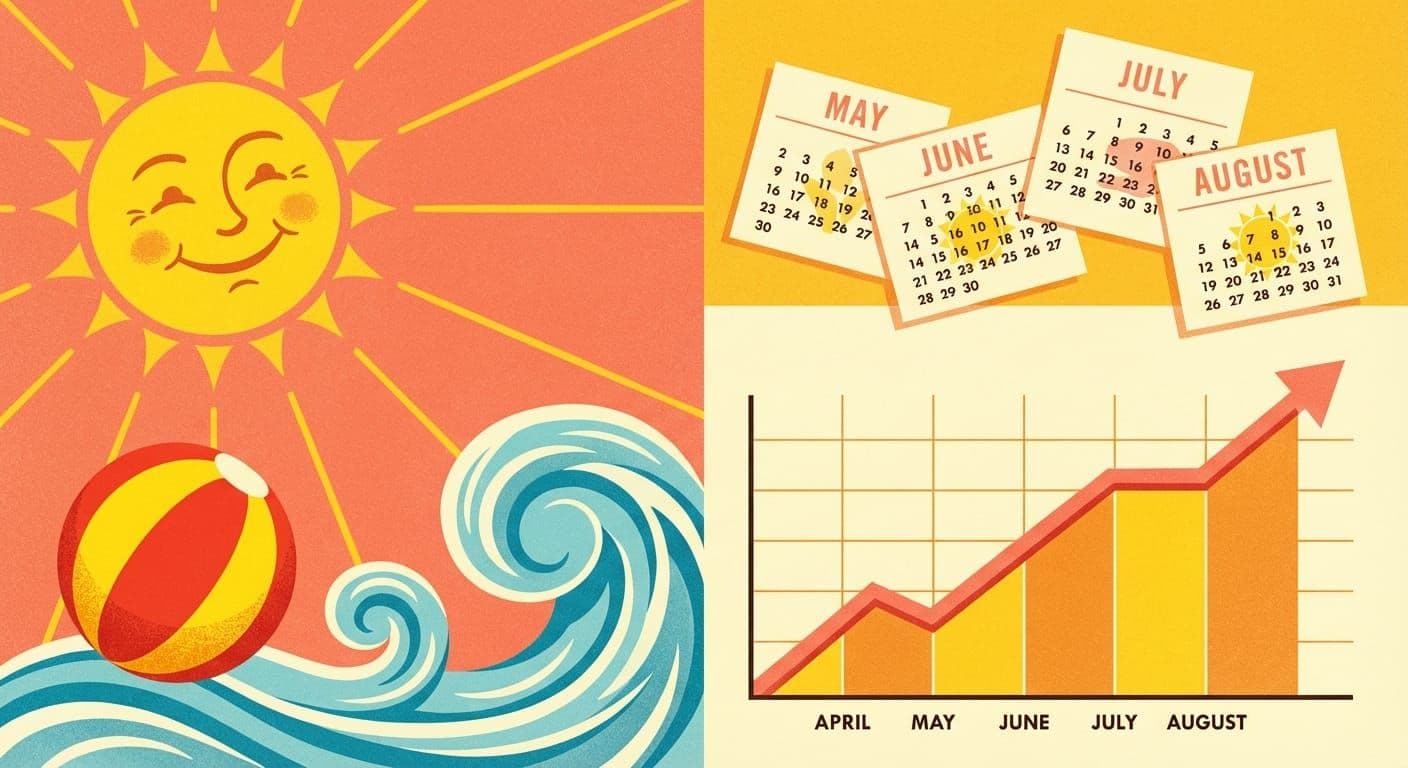
Research shows students with disabilities often experience greater summer regression than peers. Proactive planning now can protect months of progress.
Why Behavior Skills Regress
Structure Loss
School provides predictable routines that support behavior regulation. Summer schedules are often inconsistent.
Reinforcement Gaps
Token economies and structured reinforcement systems typically do not transfer to home settings without explicit planning.
Creating Home-Friendly Intervention Plans
Simplify Drastically
Choose the 2-3 most critical behaviors to maintain. A focused plan is more likely to be implemented.
Use Natural Reinforcers
Token economies rarely transfer. Identify reinforcers already available at home.
Prevention Is Easier Than Recovery
Time invested now in summer planning can save weeks of recoupment in the fall.
References
McMahon, J. (1994). Extended school year: New directions and implications for school social workers. Children & Schools, 16(4), 231–239. https://doi.org/10.1093/cs/16.4.231
Barnard-Brak, L., & Stevens, T. (2021). Criteria for determining eligibility for extended school year services. Journal of Special Education, 55(1), 3–12.
Burke, M. M., & Decker, J. R. (2017). Extended school year: Legal and practical considerations for educators. Teaching Exceptional Children, 49(5), 339–346.
U.S. Department of Education. (2017). Sec. 300.106 extended school year services. https://sites.ed.gov/idea/regs/b/b/300.106
Hanley, G. P., Iwata, B. A., & McCord, B. E. (2003). Functional analysis of problem behavior: A review. Journal of Applied Behavior Analysis, 36(2), 147–185. https://doi.org/10.1901/jaba.2003.36-147
Iwata, B. A., Dorsey, M. F., Slifer, K. J., Bauman, K. E., & Richman, G. S. (1994). Toward a functional analysis of self-injury. Journal of Applied Behavior Analysis, 27(2), 197–209. https://doi.org/10.1901/jaba.1994.27-197
Newcomer, L. L., & Lewis, T. J. (2004). Functional behavioral assessment: An investigation of assessment reliability and effectiveness of function-based interventions. Journal of Emotional and Behavioral Disorders, 12(3), 168–181. https://doi.org/10.1177/10634266040120030401
Ingram, K., Lewis-Palmer, T., & Sugai, G. (2005). Function-based intervention planning: Comparing the effectiveness of FBA function-based and non-function-based intervention plans. Journal of Positive Behavior Interventions, 7(4), 224–236. https://doi.org/10.1177/10983007050070040401
Scott, T. M., Alter, P. J., & McQuillan, K. (2010). Functional behavior assessment in classroom settings: Scaling down to scale up. Intervention in School and Clinic, 46(2), 87–94. https://doi.org/10.1177/1053451210374986
Blue-Banning, M., Summers, J. A., Frankland, H. C., Lord Nelson, L., & Beegle, G. (2004). Dimensions of family and professional partnerships: Constructive guidelines for collaboration. Exceptional Children, 70(2), 167–184. https://doi.org/10.1177/001440290407000203
Sheridan, S. M., Smith, T. E., Kim, E. M., Beretvas, S. N., & Park, S. (2019). A meta-analysis of family-school interventions and children’s social-emotional functioning: Moderators and components of efficacy. Review of Educational Research, 89(2), 296–332. https://doi.org/10.3102/0034654318825437
Lei, H., Cui, Y., & Chiu, M. M. (2016). Affective teacher-student relationships and students’ externalizing behavior problems: A meta-analysis. Frontiers in Psychology, 7, 1311. https://doi.org/10.3389/fpsyg.2016.01311
U.S. Department of Education. (2021). FERPA general guidance for parents and eligible students. https://studentprivacy.ed.gov/
Put This Into Practice
Turn the article into action with ready-to-use materials. Downloads stay open; emailed resources and quiz results are opt-in.
Key Takeaways
- Understand why summer regression occurs and which students are most at risk
- Create parent-friendly home intervention plans that are actually implementable
- Document ESY eligibility using behavior data effectively
- Design bridge activities that maintain skills during breaks
How Protected Is Your Students' Progress This Summer?
Find out if September will be a happy reunion or a heartbreaking "back to square one."
For classroom teams
Take this resource with you
A printable resource to use with your team.
Download Summer Continuity ToolkitFree download.
About the Author
Practical guides from the Classroom Pulse team for educators and behavior support teams who collect and use behavior data. Classroom Pulse was founded by Bobby Hillman, M.Ed., LBA, BCBA.
About Classroom PulseRelated Articles
Class Parties, Costume Days, and Assemblies: Planning Behavior Support
Event days stack changed routines, noise, costumes, food, and thin adult structure. Plan them like a new routine, staff them like a transition, and tag them in your data.
You're Already Collecting Behavior Data: You're Just Not Writing It Down
You already know who struggles at transitions and when the hard moments cluster. That's data. Here's how to turn the mental notes you're already making into 30-second logs that count in meetings.
Behavior-Specific Praise and Reinforcement: Timing, Ratio, and Common Mistakes
Praise and reinforcement are evidence-based only when students can connect them to the expected behavior. Learn how timing, specificity, and reinforcement match affect classroom behavior support.